Today during our Trout in the Classroom macroinvertebrate sampling we had something very cool happen: Dozens of tiny BWOs (blue-winged olives) emerged right in our sample bins! Afterward we could see the shucks in the bin. It was great to be able to show the students this happening in realtime.
Also, here is a nice example of a stick caddis we found today:
Marie and Jay invited us over for dinner. Charlie loves playing with their cat, Maisie, so I took a little break from tying stripe bass flies to tie a hookless cat toy for Charlie to take over.
Just different feathers, no flash, because I don’t want the cat to accidentally eat plastic if it gets too excited.
I call it “Maizy’s Deceiver.”
I tied it on a swivel clip, which will be able to clip to the end of a cat toy wand they already have.
Maizy, and the elusive other cat, Bob, seemed to enjoy playing with it.
I used multiple colors on this one, relying on dyed feathers. For the next one I plan on using all natural feathers that haven’t been bleached in any way. I wonder if the cats will enjoy the natural scent?
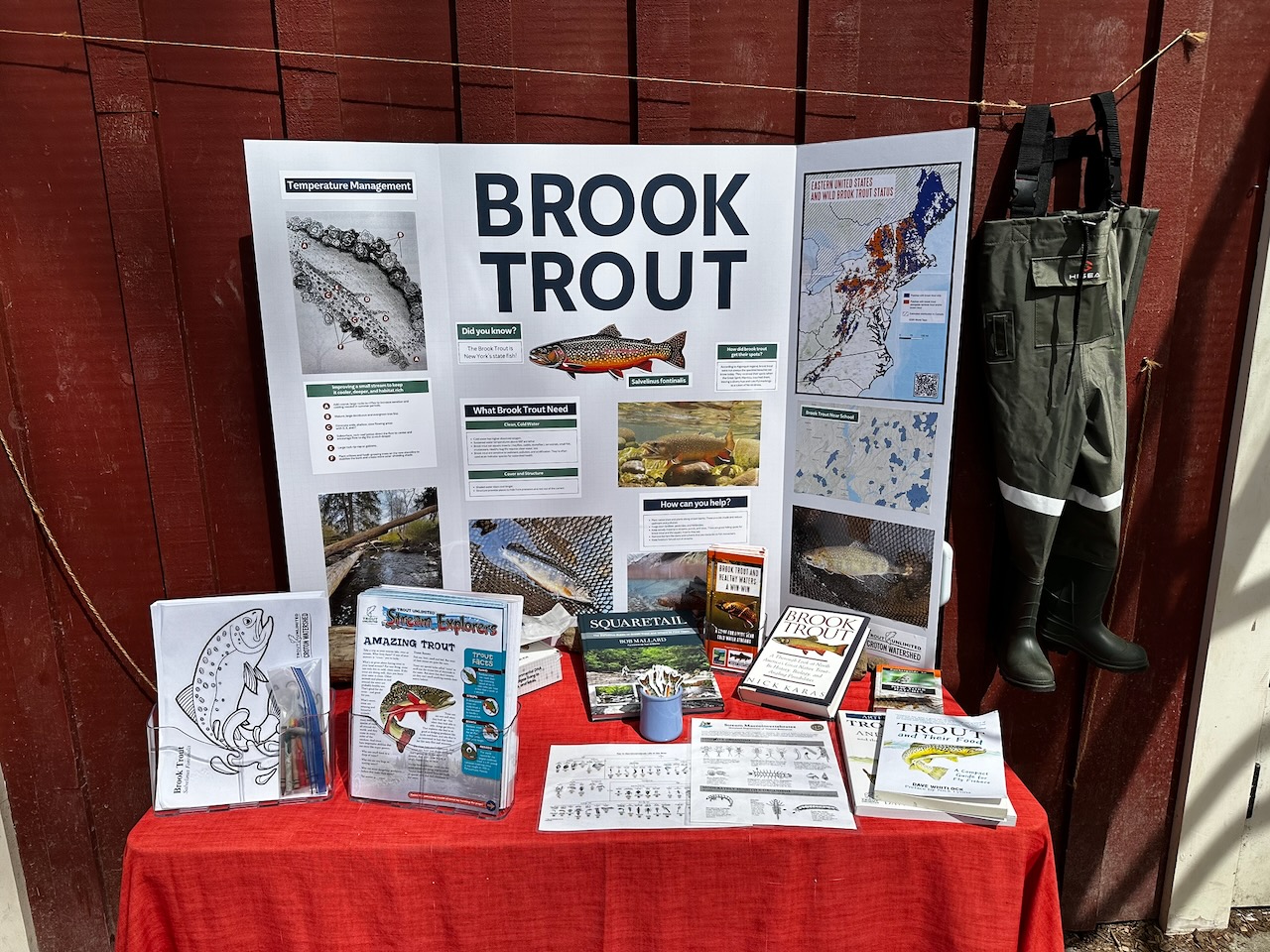
Charlie’s school had an Earth Day event today and I set up a table on conserving brook trout, New York’s state fish, and the only trout native to the eastern US.
I put together some stuff for all age groups:
Coloring pages for the younger students
A pamphlet on the trout life cycle for middle school students
A pamphlet with information about brook trout and conservation tips for junior high students and adults
Books to look at
Info on the bugs trout like to eat in streams
Maps of known brook trout populations in the local area and the eastern seaboard
A diagram on stream temperature management
An Algonquin legend about how the brook trout got their spots as a gift from the Great Spirit
The younger students loved the coloring pages, too. Here’s one someone colored:
Amanda helped me make the poster board. I sent a bunch of materials and copy her way and she laid it all out beautifully. Thank you for your help, love!
We had a really fun afternoon at Charlie’s school. It was interesting to see what the students gravitated toward. Some liked the trout, some liked the bugs, some wanted to talk about fishing, some wanted to know about why I like brook trout so much.
Do you want to do a brook trout conservation table? I put together some resources to get you started:
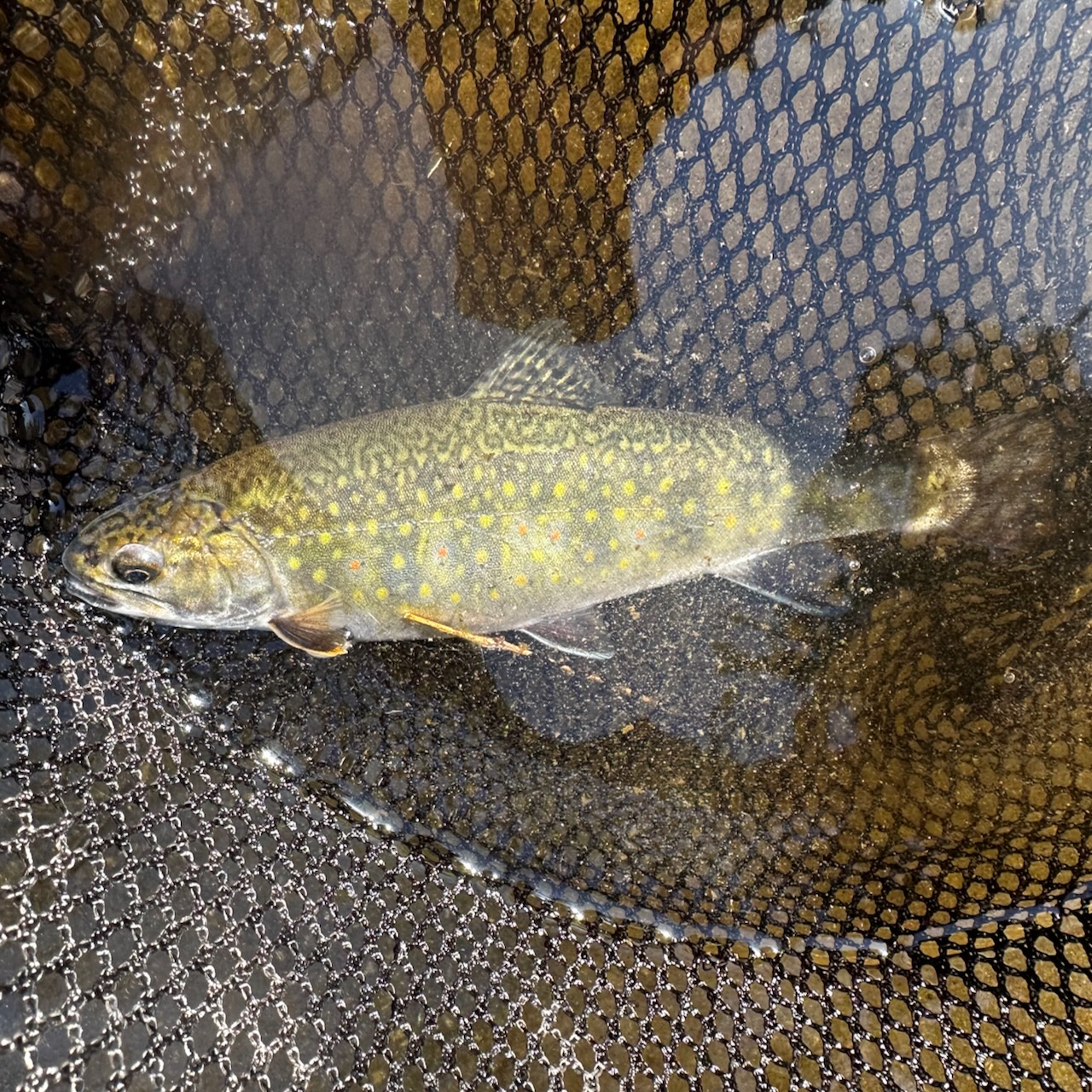
Today I caught a beautiful wild brook trout today in Westchester County, just five miles from my house. I’d heard whispers that this small stream contained brook trout, and I was delighted to catch one on my first outing there.
I’ve caught brook trout in Cross River, but since so much stocking goes in there, it is hard to tell whether they are wild or holdovers.
But in today’s stream, which I’m not going to name here, I am pretty certain this brook trout is wild, as there are no stocking records I can find for this stream.
New technique: Sticking your iPhone down in the water while running a video to film the fish swimming away.
A beauty!
I caught it in classic brookie territory: Around the deadfalls.
The stream also has some nice macroinvertebrate life, including some giant stoneflies and some free floating caddis, both of which are indicator species of clean water, which was running at 54F today.
This stream is a wonder. Small, but full of life. I also saw a turtle trying to disguise itself as a rock:
This small stream is a gem hidden away in Westchester. Who would have thought we have wild brook trout here? We do. Let’s conserve them.
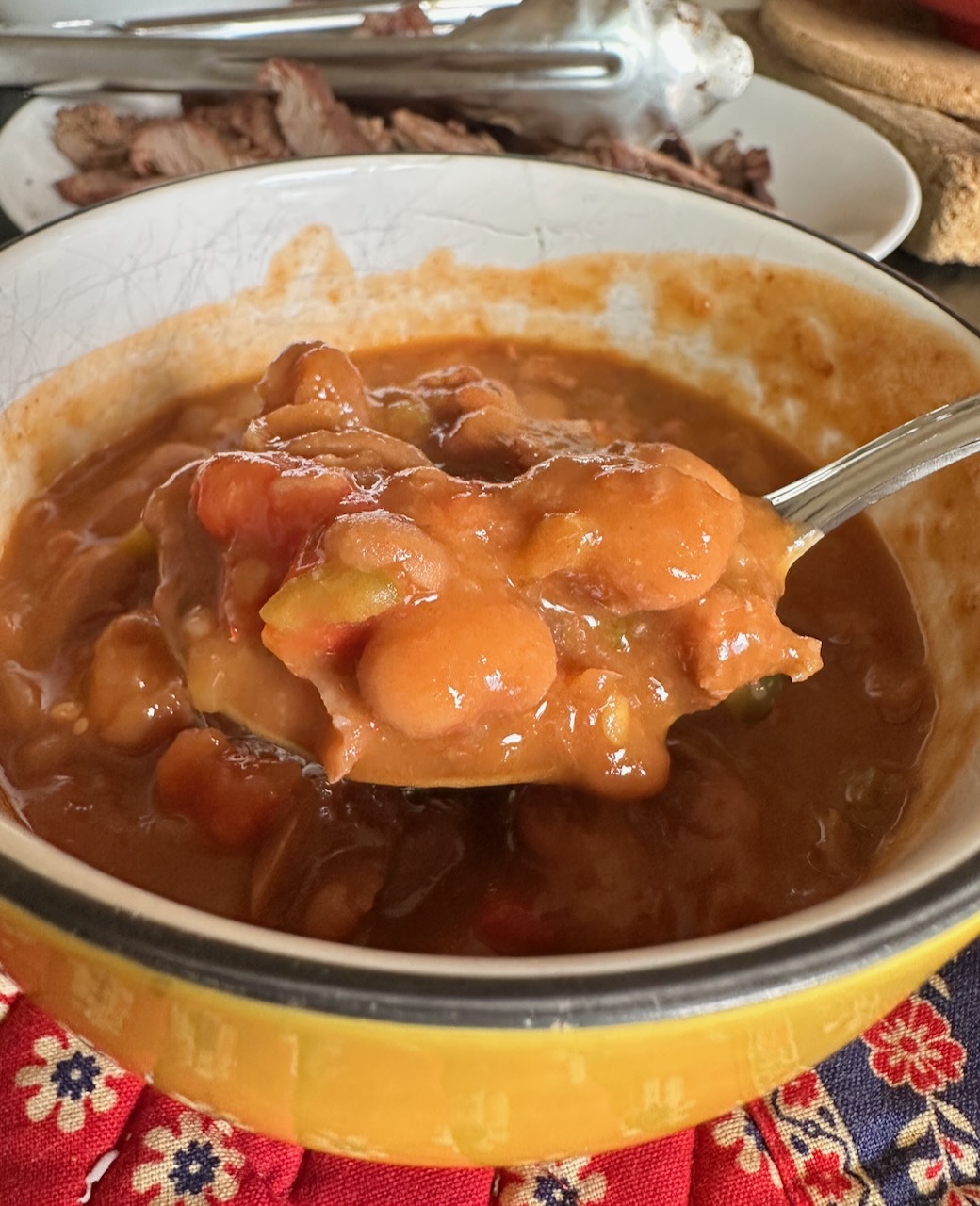
For this week’s bean adventure, I made Charro Beans, or Frijoles Charros. I looked at multiple recipes and cobbled together my own, which I’ll attempt to put down in words here:
1lb dried pinto beans, soaked for four hours then cooked with onion, carrot, and bay leaves.
4 tbsp bacon grease
1/4lb Mexican chorizo
1 serrano chile
4 garlic cloves
1/2 red bell pepper
1/2 poblano pepper
1 cup chopped tomatoes
Salt
Notes:
I didn’t put any bacon in there, thinking the bacon grease + chorizo would be enough. Next time I think I’ll add bacon. I think this would be a good use for bacon ends you sometimes see on sale in butcher shops.
I know charro beans are typically soupy, but I cooked this batch down until they were a little thicker, which is how I prefer them.
I ate these frequently last week: On the side in a bowl, as an ingredient in tacos, as the sole ingredient in tacos, and in breakfast tacos. Delicious, versatile dish.
Since I made a full pound of beans, I had plenty of leftovers.
What do you do with leftover charro beans? According to Arnie Tex, you turn them into Frijoles Puercos.
I used a blend of Arnie’s recipe and this recipe from Maricruz Avalos:
I used Oaxaca cheese, which Charlie calls Mexican String Cheese. It basically is!
The Frijoles Puercos were great. We ate it as an appetizer the first day, then the next day we put it in breakfast tacos with scrambled eggs. Highly recommended.
Amanda even put some on a hot dog in place of chili, and now she is requesting that I make another batch soon.
I think I’ll make some for the next friend hang cookout.
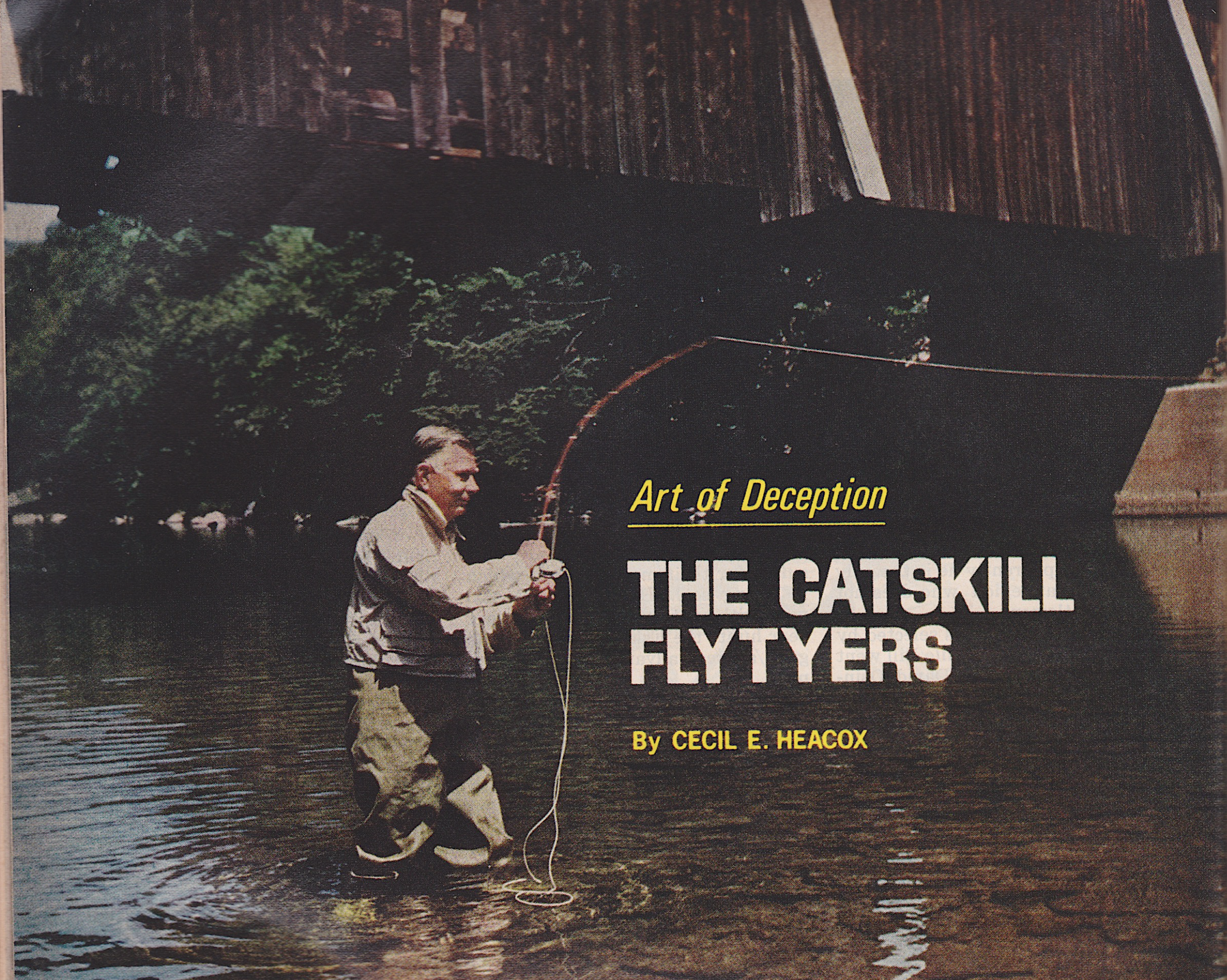
At some point, I think someone needs to publish a Cecil Heacox Collected Works project. Perhaps that is my responsibility, now that I’ve confronted the possibility. If you want to help with that, let me know.
I walked and fished the section of the Pocantico River running through Rockefeller Preserve to document disturbances with TU’s RIVERS app as part of the Big Apple Brook Trout program.
Some main takeaways:
I documented some erosion and some places I’d be concerned about surface runoff, but in general this is a pretty well maintained section of stream.
The water temp was warm for this time of year. Mid 60s in most spots, as high as 67 in one spot. I get that this is the lower section and the past couple days have been hot, but that is higher than I’d expect.
There is already some conservation work happening. Some removal of things like Knotweed, bolstering the banks against erosion with large rocks, some young tree plantings.
The office said that the local Trout in the Classroom program is changing this year and they only allow brook trout releases there, no brown trout releases. The state still stocks brown trout, though. I wonder if we can change that?
I caught a young largemouth bass and hooked up with that I’m pretty sure were two small (6-8in) brown trout, but they didn’t make it to the net. Both slipped my barbless hooks at my feet (from what I did see of them I noticed the lighter upper body, so pretty sure they are the smaller stocked browns). Lots of rises today, though, in the three bigger pools in this section of the river.
The largemouth bass I was surprised to catch when I was casting to rising trout:
After three weeks of walking through the woods at night looking at vernal pools with a flashlight, I finally found a spotted salamander!
They are slow on land, but pretty quick to swim away and hide in water. I had to be patient and wait about 30 minutes for this one to come back out after I initially spooked it.
Charlie and I have been keeping an eye on the patches of Trout Lilies in our local woods, and today they were in full bloom.
Much to my dismay, I learned after lugging my SLR out that I had forgotten the memory card in my card reader on my desk. So iPhone photos will have to suffice.
We also saw some Wood Anemone and fiddlehead ferns:
Charlie found a black and yellow feather that we think is probably from a Northern Flicker.
Lots happening in our yard, too. Arugula, radishes, and volunteer tomatillos are sprouting, the rhododendron, forsythia, and tulips are blooming, and the yard is full of violets.
Jon and I got out today on the Croton River for the first row of the season.
Charlie and I spent some time earlier this week scrubbing out the guideboat and getting it cleaned up. Despite being wrapped in a tarp in my boat racks behind the workshop, some raccoons found their way in and made a mess.
Inspired by Brian Schulz, I picked up some Aere Beach Rollers to use as float bags in the guideboat. Think of them as repurposed inflatable dock bumpers.
I’ve never flipped, but they give me piece of mind going out in the Hudson during windy weather, and when taking Charlie out. I strapped them in with 4ft x 1in straps.
They did not interfere with my rowing, and I found them comfortable as arm rests and to lean my legs against. They also had a secondary benefit of holding my removable seat in place, even when the boat is upside down on top of the car.
Tertiary benefit: Decent makeshift fly rod holder.
Jon and I plan to do some tests when it is warmer out. We’ll row up to a favorite swimming hole and flip one boat with float bags and one without float bags and compare the difficulty we have in recovering them. Both of us know how to self-rescue in kayaks, but haven’t tried in the guideboats before, so it should be interesting.
One of the main draws of the Adirondack Guideboat is the overall stability because of their shape and displacement volume. Still, good to be prepared, especially when a 4yo is a passenger.
Speaking of Charlie, he didn’t go with me today because I don’t feel comfortable taking him out on the water when it is this cold. The water temp was 53F and the air temp was around 56F. Too cold for someone without much body fat who is still learning to swim. I promised to take him out as soon as it warms up.
As Jon and I were rowing back downriver, someone on a dock waved us over. We met Gareth Hougham of the Hudson Valley Stream Conservancy, who recognized our Adirondack Guideboats and wanted to see them and chat with us. Gareth is a delightful guy doing great conservation work in the area, and I’m glad we got to meet.
A secondary reason for going out today was to try casting a fly rod from the guideboat for the first time. Can you believe I’ve had the guideboat for almost 5 years and hadn’t cast a line from it yet? I brought my 8wt striped bass rod and cast it around the mouth of the Croton River, though still on the Croton side of the train trestle. Way too windy today to go out into the bay.
I didn’t catch anything, but I did get some practice casting from the boat and now all my gear is ready. I’ll go out again soon and target some striped bass for real.
Nice evening out on the water. Looking forward to the 2026 season.
I prefer wild fish, but there are only a few streams in this region with wild populations, so the state stocks the others.
Two things stick out to me:
They didn’t stock the regular Cross River going through Ward Pound Ridge this year, just the reservoir. They usually stock up by Kimberley Bridge, making that a popular pool to catch fish. There’s often multiple people up by the bridge jockeying for a spot. Without stocked fish, that pool will be a lot skinnier this year. I have caught non-stocked brook trout and fallfish in that pool (the state only stocked brown trout there the last few years), so you can still catch fish there, but this year it is probably going to be more productive to fish the lower sections of the river through the woods. This section is not stocked by DEC, but it is the spot where the TIC trout releases are done, so it is likely that fish you catch there are survivors that have grown up. Perhaps the state thinks that the TIC releases are enough for Cross River? There is the possibility of wild fish down there, too. Let’s hope that the lack of stocking might help the brook trout populations in the stream grow and reproduce. I caught a nice little brook trout on a dry fly in there this afternoon.
DEC also didn’t stock Boyd’s Corner this year. There are typically a few wild fish and stocked holdovers in there, if you can find them. I like to hit this stream late summer when the terrestrials are out, but I might go earlier this year because it will be nice not to have the hordes of spin casters there targeting stocked fish. The stocked spots are always busy in April, and I prefer solitude.
I’m intrigued by the rainbow trout below the Croton dam, in the east branch, and in the Titicus River. Last year the Titicus was so low it wasn’t worth fishing. With plenty of rain this spring it might be worth visiting in May. Below the Croton dam is good in June, because the NYC DEP has to release cold water through the end of June, when everywhere else is starting to heat up.
It was good! Pretty easy to make. Not a lot of active time, mostly waiting on things to cook.
I used cabbage and tomatoes from my freezer, since I’ve been on a kick to eat through our frozen food so we can rotate it. I think this would have been better with fresh cabbage, because I wasn’t able to brown the frozen cabbage. Oh well. Still good.
My photos are not as nice looking as Alison Roman’s. Not a super photogenic dish. Tasty, though.
Don’t skip the vinegar or the parmesan cheese. The dish definitely benefits from both.
I cooked some cannellini beans from scratch for this, Marcella Beans.
I’m keeping this in mind whenever I have leftover cannellini beans or a head of cabbage I don’t know what to do with. Definitely a filling cool weather dish, great for this rainy day.
I am thankful March 2026 was much different than March 2025, when I was in the hospital for a blood clot in my kidney. I’m doing fine now, and I reflected more on that in my birthday post.
March started with some fly tying and catching my first trout of the season with snow on the ground.
March ended with a backyard spring break art party so warm that a few people were wearing shorts.
My weather station recorded a low of 15.4°F on 3/2/26 and a high of 81.7°F on 3/10/26. Wild month weather-wise.
Some March highlights:
I’m glad to see the natural world waking up again. Crocuses, bluebells, daffodils, and forsythias all blooming. Trees budding out. Spring peepers and green frogs. Charlie and I saw a snapping turtle and a snake by the pond this week.
We’ve spent a lot of time outside this month. Lots of bike rides, swinging, and cooking in the mud kitchen after school, woods walks, planting grass seed, and tromping around in water. It is good to be outside.
Charlie and I had lunch one day at the train station.
My friend Tyler texted that he built a swing set for his son. I get such a kick out of people building these.
I got to hang out with some friends at a recording studio while they jammed for Jeremy’s birthday. I’m not a musician, but it was cool to chill and listen to them.
I drove over to Boiceville in the Catskills to listen to Ed Ostapczuk’s presentation on identifying unique heritage brook trout strains at the Ashokan-Pepacton TU chapter meeting. I was excited to meet Ed after reading his writing, and I appreciated the conversations I had with many of the chapter members.
Charlie’s class made a little village and we got to go see it.
Mom and Dad came to visit. Dad taught me how to replace copper plumbing with Pex and helped me replace our shower hardware and valves. We also walked around Beacon. They also helped with the trout release.
While they visited, they hung out with Charlie one evening so Amanda and I could go on a date. It was excellent, and the company was so good I forgot to take a photo.
We had a tea party.
The rhubarb forcing is going well.
I ended the month by tying some synthetic polyester fur Clouser minnows. I want to get out and fish for striped bass soon!
Charlie ended the month by climbing our hydrangea, which he calls “the tumbleweed tree.”
I went out on Monday to help with the macroinvertebrate sampling, student macro identification, and the releases. It was spring break for Charlie and my parents were in town, so the three of them came along for the day.
The macroinvertebrate sampling was excellent, as it always is on the Cross River.
In about 10 minutes, Ihor, George, and I collected:
2 species of Stoneflies
2 species of Mayflies
2 species of Caddis (rock cased caddis and free floating green caddis)
Crawfish
Blood midges
Water pennies
Hellgrammites/Dobson fly larvae
Crane fly larvae
Horsehair worms
Scuds
Eggs (probably fallfish)
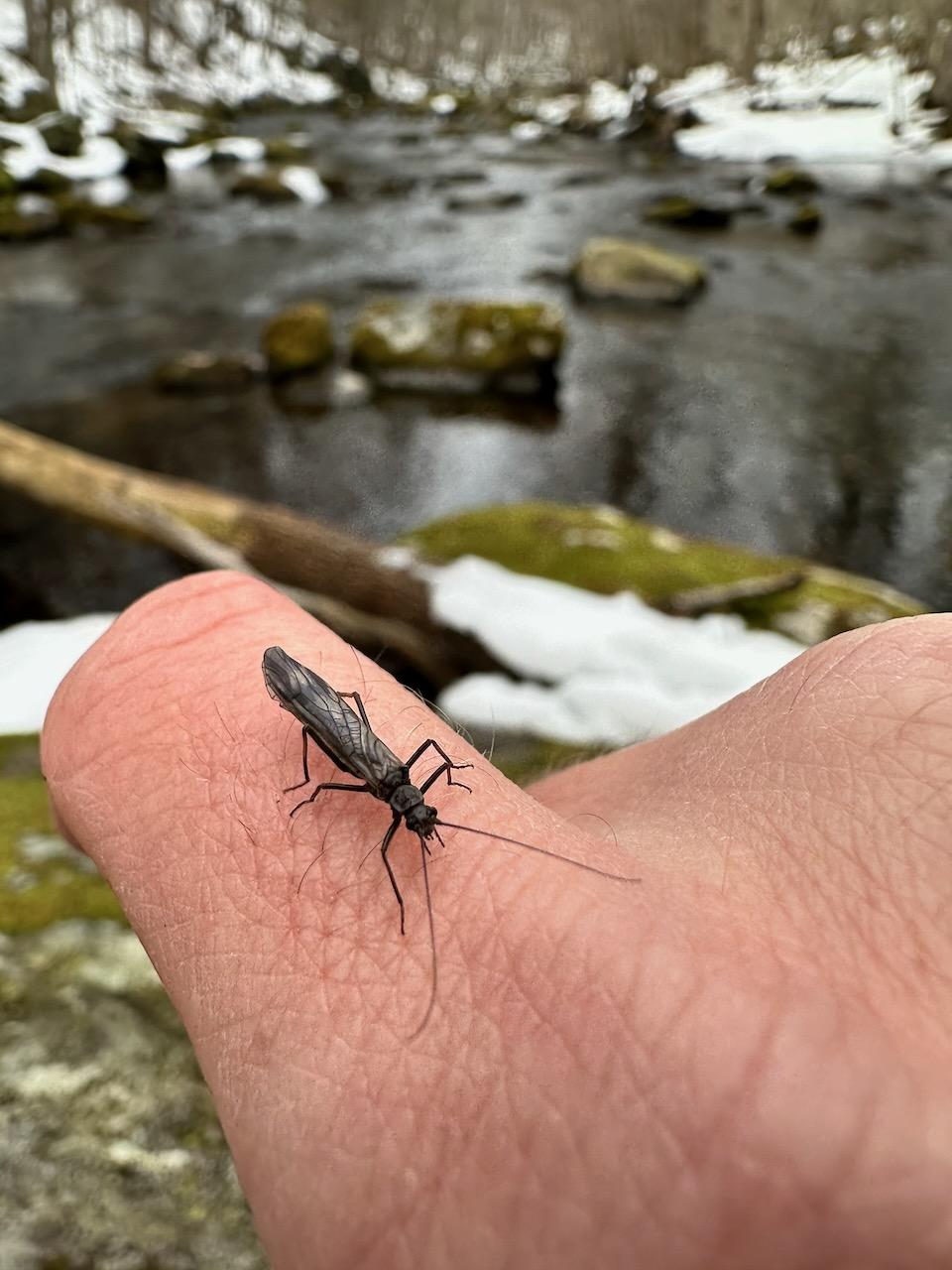
By the time the students arrived and we were helping them identify the macros, little black stoneflies were hatching and landing on them. Some loved it and some hated it, but it was great to be able to show them both the nymph and adult stage of the stoneflies.
Charlie walked around with my Bug Book and showed the students pictures of adult stoneflies and mayflies.
“This is a stonefly. It means the water is really clean!”
Charlie, 4 years old
He is exactly right, stoneflies are an indicator species and are only found in clean water.
As much as the students are fascinated with seeing the bugs from the stream that the trout eat, the main event is definitely releasing the baby trout they hatched in their classrooms and cared for.
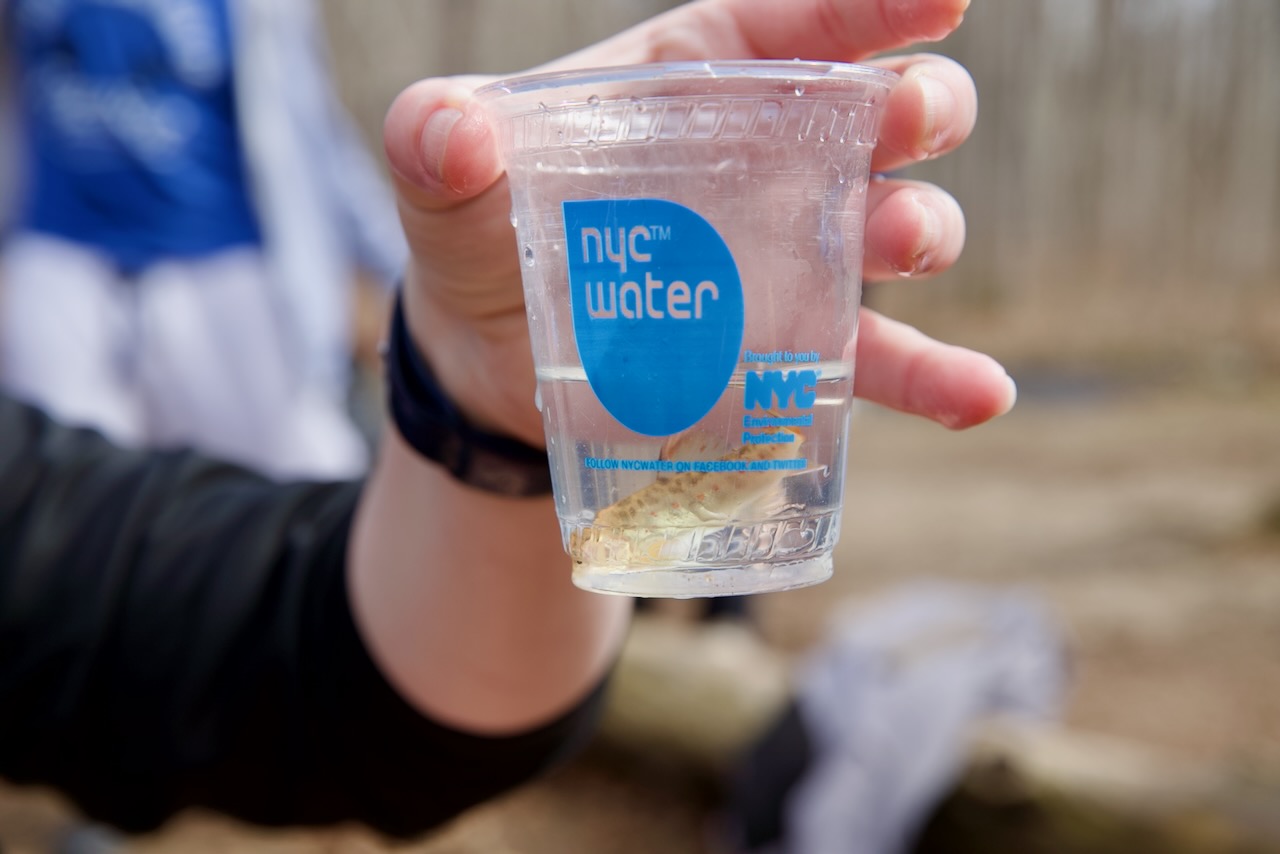
Mackenna from the NYC DEP walked them through equalizing the bucket temperature with the stream and handed out baby trout to the eager students, who said goodbye and wished the baby fish well.
After the students all got to release trout, they were nice enough to let Charlie release one, too. He was thrilled.
It was a great day. I signed up to help with another one next month.
If you are a teacher and are interested in raising trout in your classroom, or a TU member interested in helping with a TIC release, reach out!
Charlie and I went and explored a creek about 13 minutes away from our house. I heard rumors that there is a native brook trout population there and Charlie jumped at the chance to try out his new waders. Win-win. It was a beautiful sunny day, and we only needed a light jacket.
The first great sign was little black stoneflies everywhere. A hatch was going on while we were there and they were crawling all over us. Charlie didn’t seem to mind.
Lots of skunk cabbages popping up, too.
We had a little chat about wading safely in moving water and found him a wading stick.
Charlie’s waders are from HISEA. They seem to be pretty good quality, kept him dry, and include a wading belt. If you have a young one who is interested in creeks, rivers, marshes, and the like, get them a pair.
Great afternoon exploring. Charlie found a black walnut, a nice piece of birch bark (we talked about how it was once used like paper), and some small pinecones.
The creek looks fishy to me. Good flows, clean water, macroinvertebrate life, some deep holes, lots of deadfalls. I’m eager to come back with a rod and see if I can find some brook trout.
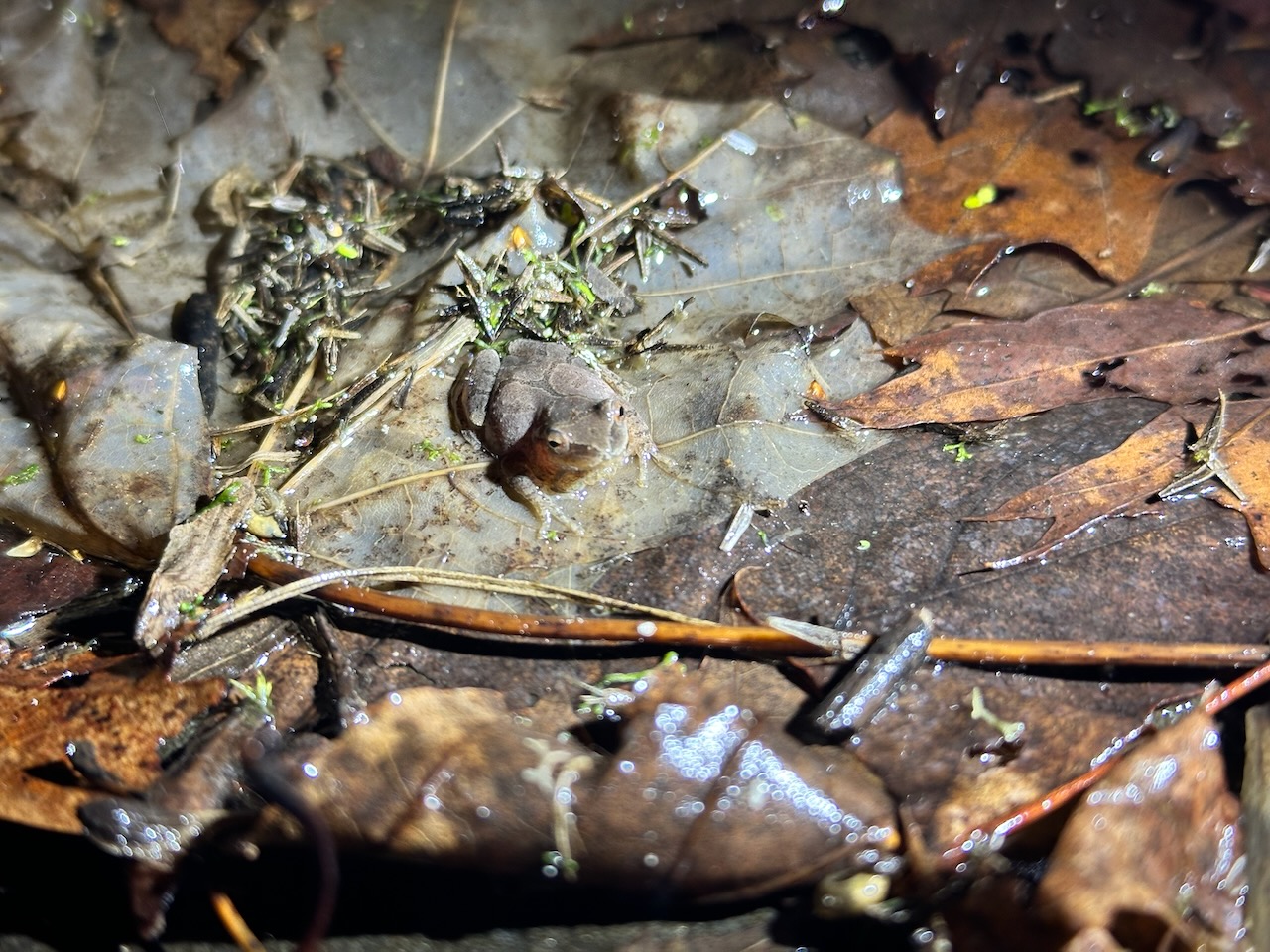
Charlie and I went out in the woods after dark searching for yellow spotted salamanders. I think it might be a bit early yet for the salamanders, but we were lucky to find the spring peepers out in full display in the vernal pools.
The moment we stepped out the front door, we heard their distinctive calls. By the time we got to the woods, the noise was deafening.
(Bonus Charlie at the end saying, “Daddy, I want to get some rain on my tongue, but no rain is landing on my tongue!”)
We had a lot of fun watching and catching the little spring peepers. Here are a few photos I grabbed with my phone:
We mostly spotted them on sticks and small logs, and in the leaf litter along the edge of the vernal pools.
We even got to see some mating, but those photos weren’t great. I’ll bring my SLR and tripod another night when it isn’t raining and see if I can get some better photos.
You can see the distinctive X marking on this one’s back:
Charlie’s joyful giggles when he got to hold them were infectious. He always let them go quickly, so I never got a photo of him holding one. He said, “I want to let them get back to the water and their friends.” Sweet little boy.
Once you get into fly tying, you accumulate a lot of materials. If you aren’t careful, a lot of that gets thrown into a drawer or a box, which makes that small bag of CDC almost impossible to find.
First I organized my thread and yarn, then I organized my beads and hooks.
Thankfully fly tying thread generally goes on the same spools that sewing thread goes on, and there are tons of thread organizers out there. Here is what I use:
For hooks and beads, I took a page out of our seed organizing binders, quite literally. I got a small binder and clear zipper pouch inserts. I organize the hooks by size and beads by size and type (countersunk, slotted, cone, barbell.) I thought about organizing the hooks by type as well we size, but decided that is overkill.
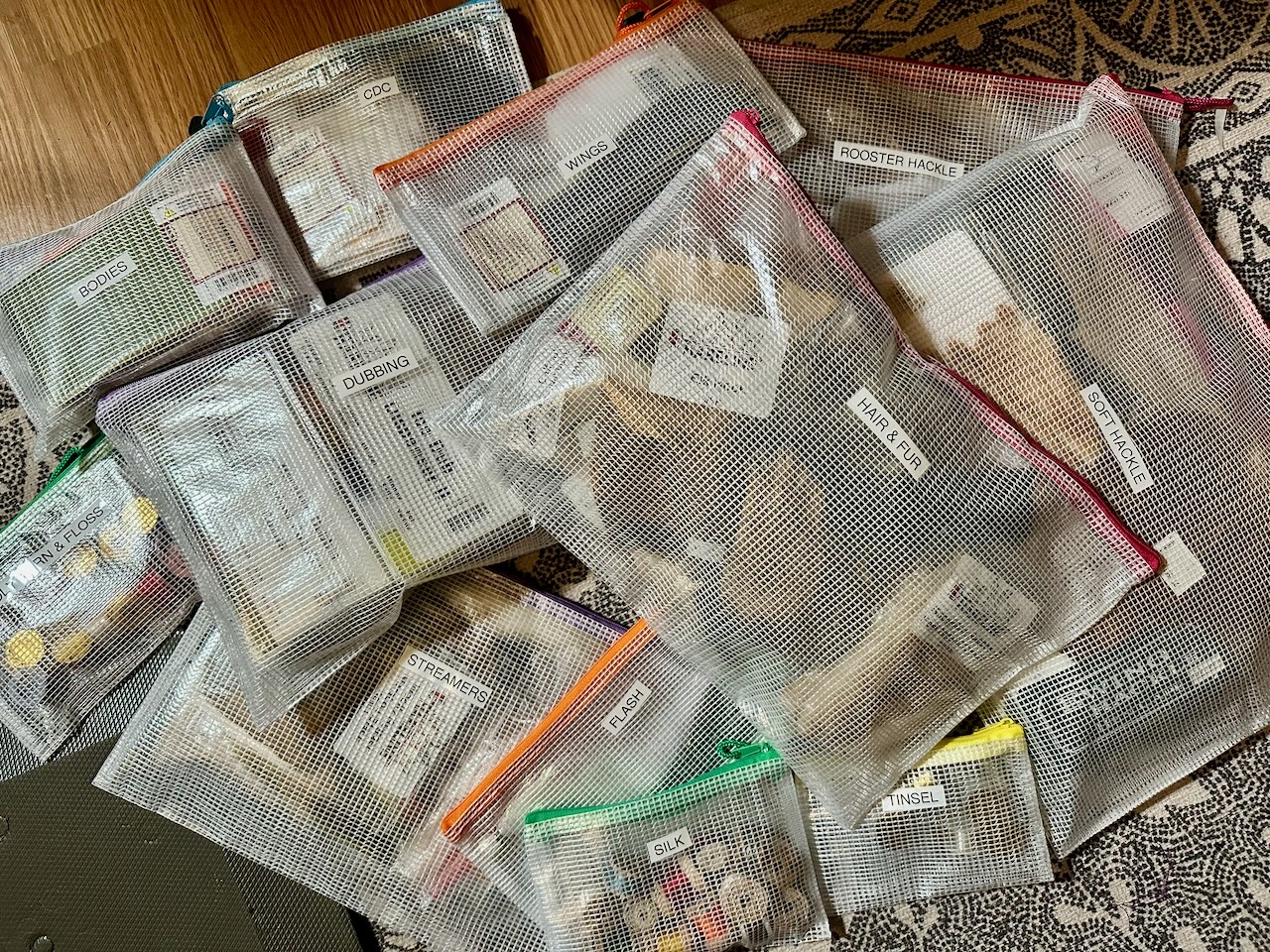
Everything else went in a couple drawers. That finally started to drive me crazy, so this week I got my act together and organized the rest of it. I took a queue from the moms in my life and got some zipper organizers in various sizes. Every mom in our friend group has these for art supplies, puzzles, backup clothes, sunscreen, bandaids, etc. They are also perfect for organizing fly tying materials, so I ordered my own pack.
The grouping that seemed reasonable to me:
Soft Hackle
The largest pack for me.
Hair & Fur
Second largest. Deer, Elk, Rabbit, Squirrel, Mole, etc.
Synthetics, mostly. Foam, chenille, egg yarn. One pack of quill bodies.
CDC
I love CDC and have it in a few colors, though I mostly use natural.
Wings
Matched quill pairs, para post, mallard flank.
Flash
I only have a couple colors of this, but it is so messy that it needs to stay by itself.
Silk
The antique stuff for wet flies and flymphs that I’ve tracked down (Pearsall’s Gossamer and Belding Corticelli Buttonhole Twist), and some of the newer Ephemera from 54 Dean Street.
Poly yarn & floss
I don’t use this much, but got it in a pack of stuff I bought on eBay. I mostly use it in small amounts on tags.
Tinsel
Gold, silver, and copper.
Yes, these bags themselves go in the drawer, but now it is much easier to pull out just the couple bags I need.
I also got the glass beads out of their various vials and put them in an organizer by size and color:
When I need to take some stuff to a fly tying night or on a fishing trip, I have a Toyo Y-350 box that I pack just the small amount of materials and tools I need, plus the table clamp for my vise. When the tools aren’t in their caddy on my desk, they travel in a Maxpedition EDC organizer.
How do you organize your fly tying stuff? I want to see your post!
You probably know Scott from Seeing Like a State or The Art of Not Being Governed. He is a political scientist and anthropologist, and he blends that very well into a book about the environment and ecology.
Demon’s Game by Rob Worthing.
The new book out in the tenkara space, focused on the Oni School of tenkara (the teachings and style of Masami Sakakibara).
The Laws Guide to Nature Drawing and Journaling by John Muir Laws.
I want to get better are drawing while out in nature! This seems to be the book on the subject, so I picked it up.
Ponds, an Illustrated Guide by Patrick J. Lynch.
I follow Lynch on Bluesky and saw his new book. Charlie loves ponds and marshes, so I thought this would be a good book to look at with him and keep around the house for reference. I also pre-ordered Lynch’s forthcoming Streams illustrated guide, out in September.
Fiction
Fugitive Telemetry by Martha Wells.
Sixth book in the Murderbot Diaries series. Easy read with short chapters when I need a mental break.
Altered Carbon by Richard K. Morgan.
I watched the TV series during covid before I knew it was a book. A friend is letting me borrow his copy and I’m enjoying it.
Overnight we turned the clocks forward an hour. This afternoon the temperature on our weather station reached 66F (18.9C). The sun went down an hour later as the clock reads, so Charlie got to play outside longer than normal. The skunk cabbages are emerging.
It feels like we turned a corner and spring is on its way in.
I went out to the upper west branch of the Croton River (the west branch reservoir outlet) this afternoon for a few hours to cast out winter and the cobwebs that have accumulated on my casting form.
I was delighted to see lots of little black stoneflies on the rocks and some tiny BWOs in the air.
I also tied some glass bead dark sakasa kebari and some size 20 CDC BWOs.
I’m glad I tied the dry little black stoneflies. I was rewarded with an 8″ wild brown trout, the average size for that stream. My heart started racing when I saw it take my fly, then immediately dropped when I realized it had spit it out. I took a breath and carefully cast again to the same spot, a feeding lie below where water funneled between two large rocks. The little fish snatched my fly again, and to my delight, I hooked it. I quickly brought it to hand, and just as quickly released it back from whence it came.
My first fish of 2026, on a dry fly no less.
The banks were still icy and the water was 41F (5C), so we still have a ways to go before the sulfurs start hatching, but I’ll take the little stoneflies for now.
The warm sun, when it peeked out from behind the clouds, felt invigorating. The breeze was mostly chilly, but every now and then a gust of noticeably warm air would blow by, and it felt like standing in front of a vent. It was a welcome feeling after this long, cold winter.
I was surprised that there was still so much snow on the ground there in Carmel. Over in Peekskill almost all of our snow is gone. I hiked a little over a mile upstream to fish a section I haven’t fished before, and the trudging was slow going.
A kind whitetail led the way for about a half mile and led me to a shallow crossing before some steep terrain. I was also fortunate enough to see a blue heron out doing some of its own, and a freshly excavated pileated woodpecker feeding hole.
While trudging, I noticed a spot where something had eaten a mallard. I noticed the distinctive feathers right away. I suspect a bird of prey, because there were no footprints around the rocky bear spot littered with feathers. I selected a few subtly barred flank feathers from the scattered remains. Perhaps I’ll tie a few patterns so the duck can return to its river in a different form.
When I got home, Charlie was happily digging in the garden bed, ready to plant tomatoes and tomatillos. Me too, bud.
Amanda suggested we round out the day by firing up the grill and making hotdogs instead of the sheet pan dinner we had planned. A great idea! If you want it to be spring, you must live like it is spring.
I’m hoping to spend as much time as I can outside these next two days while we have this relative heat wave, before the standard cold, rainy March weather comes back later this week. Perhaps I’ll even get out and entice a couple more trout to rise to my fly.
I used Telex to create a Pages Family Tree block for my Digital Garden.
I wanted to be able to see my hierarchical post types in context, so it shows siblings and two levels of ancestors and two levels of children in relation to the current page I am on. I use it in the sidebar.
The skunk cabbages are emerging, a sure sign of spring.
Dates we noticed them previous years:
March 9, 2025
March 12, 2024
February 11, 2023
February 10, 2022
These photos are also me testing out a used Canon Extender EF 2x III that I picked up. The reviews are accurate: A bit of a reduction in sharpness and a reduction in speed on auto focusing. You lose a couple of aperture stops, too. Still very useful and gets a useable 400mm zoom for a small fraction of the price. H
Charlie is also getting more independent and doing things like making his own cinnamon toast.
We learned that Charlie likes antique stores, so we visited many of them throughout the month. We picked up some cool old local maps, a vintage umbrella holder for our entryway, some Cuban maracas.
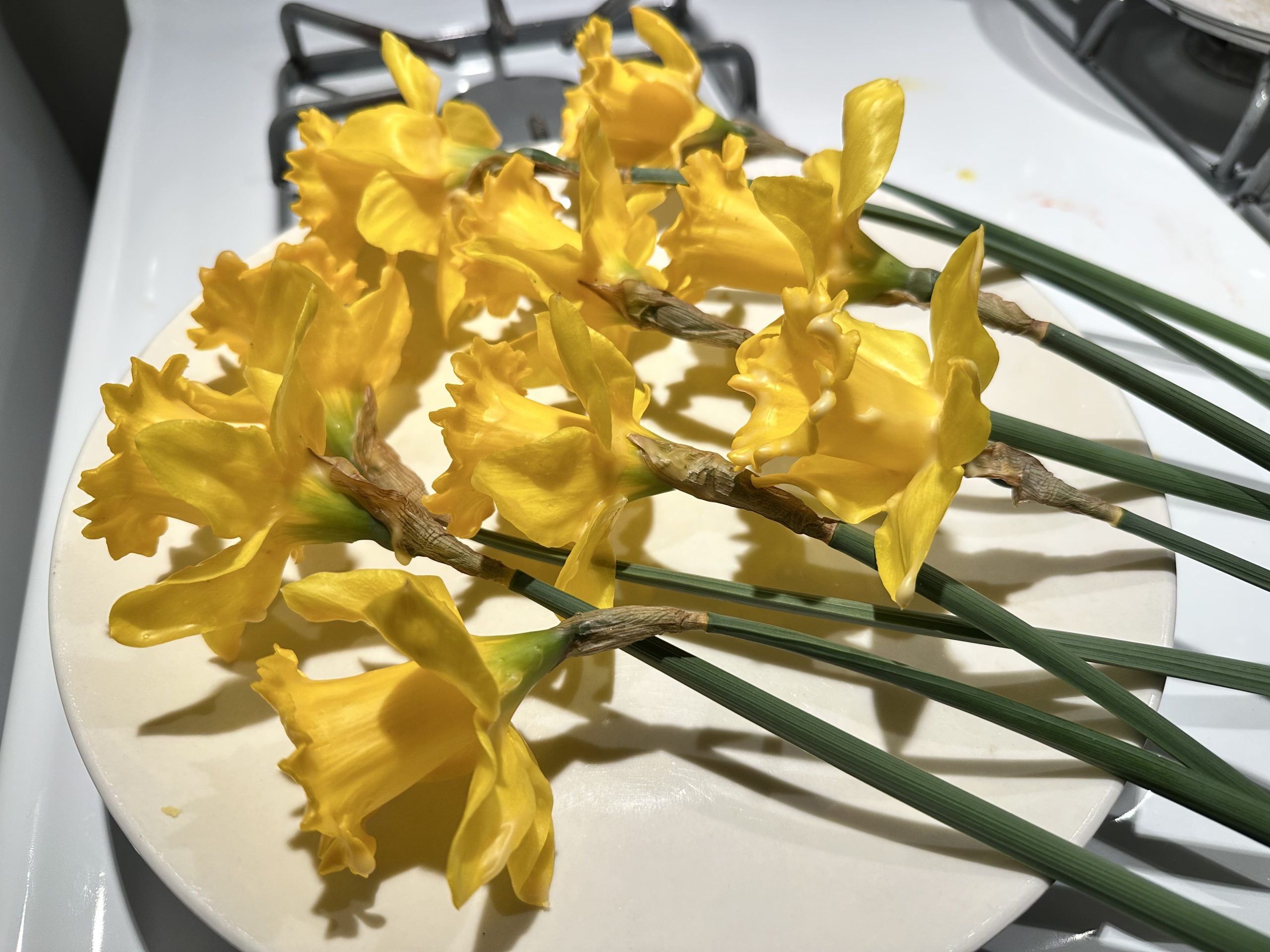
This year, the daffodils popped out of the ground on February 19.
2026: Feb 19
2025: Feb 24
2024: Feb 8
2023: Feb 14
2022: Feb 18
February was a tough month. Between snow days, weather delays, winter break, and sick days, we didn’t have a full week of school the entire month. For the shortest month, February felt pretty long. Looking forward to spring.
But I did have a fun coworker. Currently he works in our in-house art department.
During the week off school, a dad friend and I took the kids to the Norwalk Aquarium. It is a pretty good aquarium in an otherwise unremarkable city.
They breed jellyfish there and give them to other aquariums.
They had awesome touch tanks. Every aquarium has a ray touch tank, but this one also had a jellyfish touch tank and a sturgeon touch tank.
Charlie did not want to touch the jellyfish or the rays, but surprised me by jumping right up to touch the sturgeon. When I asked him why he didn’t want to touch the others but he did want to touch this one, he said: “Stingrays and jellyfish sting you, but sturgeons don’t!”
The local TU chapter (Mianus) sponsored a trout tank with brown and brook trout, and had some great info on the Mianus river watershed there. Pretty cool.
We went to the Catskills one weekend. I took lots of photos there, too!
We rented a cabin in the Phoenicia area. (Yes, we went to the diner and yes, it was great!) We made some s’mores in the fireplace. We explored at the Catskills Visitor Center.
I did a bit of fishing, though the water was 33F and I saw zero fish, even in the deepest pools I could find. Oh, well. It was nice to get out and scout some locations for the spring.
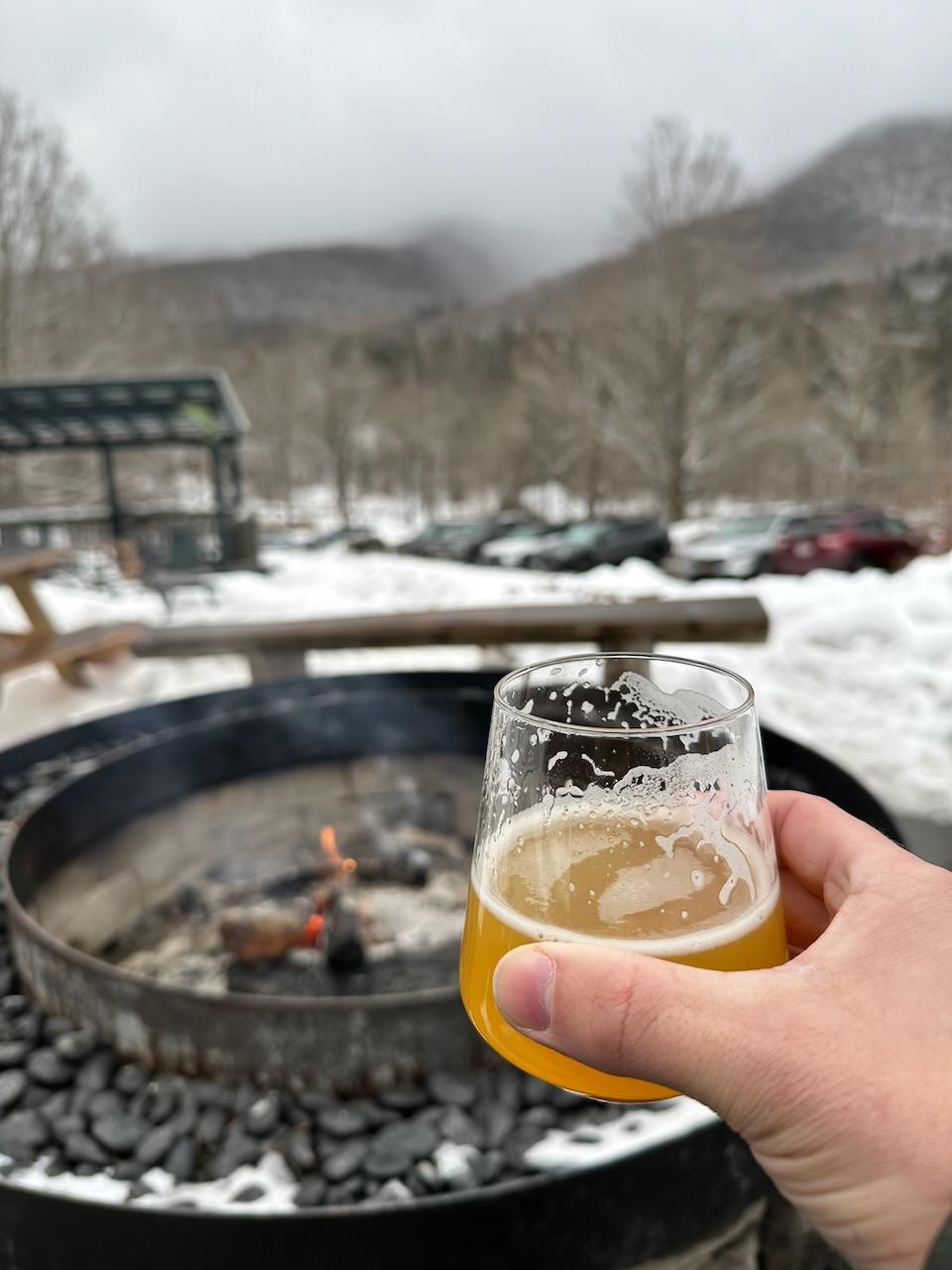
We spent an afternoon at West Kill Brewing. Incredible place. Highly recommended.
On the way home we stopped at Bread Alone Bakery and Woodstock.
We also went to Woodstock for my birthday weekend in 2023. Here is Charlie in downtown Woodstock then vs now:
Charlie and I had some fun with a Makey Makey Go that a coworker sent to me in the holiday gift exchange. First we turned an apple into a drum, then a piano, then a robot that repeated a recording of Charlie saying “Poop!”, which is pretty much the best thing for a 4yo.
Then I blew his mind and made the computer answer his questions by typing “say ….” on the command line. I made it say nice things about him and he got the biggest smile and said “Thank You” to the computer. It was sweet.
Cute Charlie quote:
“Jonas, Soren, and I were foolin’ around on the playground.”
Curious dad: “What does foolin’ around mean?”
“It is like… doing cheeky businesses!”
February ended with a nice day walking around Beacon with Charlie and Amanda.
AI has taken over my work life. If you don’t work in tech, it is hard to explain just how much work has changed in the last couple months. We are all trying to surf this wave as best we can and building lots of tooling.
There is lots of good and bad, but I’m generally optimistic about it. Things are changing rapidly and there is lots of experimentation happening day-by-day. Don’t take things you see on social media too seriously. Dive in and get your digital hands dirty and build some things for yourself.
One of my friends is out on parental leave and coming back in two weeks. I told him he is coming back to a different company.
Not a developer but want to learn how to go beyond just AI chat? This is a good place to get started: